


If you’re just joining, welcome!
Last week, I broke down the sleep blueprint - the 80/20 of what actually works. This week, I’m pulling back the curtain on the book that shaped how I think about sleep: Matthew Walker’s Why We Sleep.
This isn’t a summary. It’s my take on what hit me hardest, what felt off, and how I distilled 368 pages into the Swiss Army Mum blueprint (or SAM) so you get the protocols without needing to stress about remembering everything.

Welcome to the SAM Book Club
Here’s how this works: I don’t write summaries. I share critical reads from a busy woman’s perspective (and a mum!) - what surprised me, what I’d challenge, and how it fits into the SAM system.
Why books, not just studies?
Books - especially from trained specialists like Walker1 - are pre-curated information from hundreds of scientific publications. These people have already read the literature and kept the most relevant information (though probably with a bias toward their own research). I use primary studies sparingly, either when I want to dig deeper into a subject or to fact-check. Later on, I’ll show you how to do this search yourself and make sure you’re getting trustworthy results.
SAM is the synthesis layer
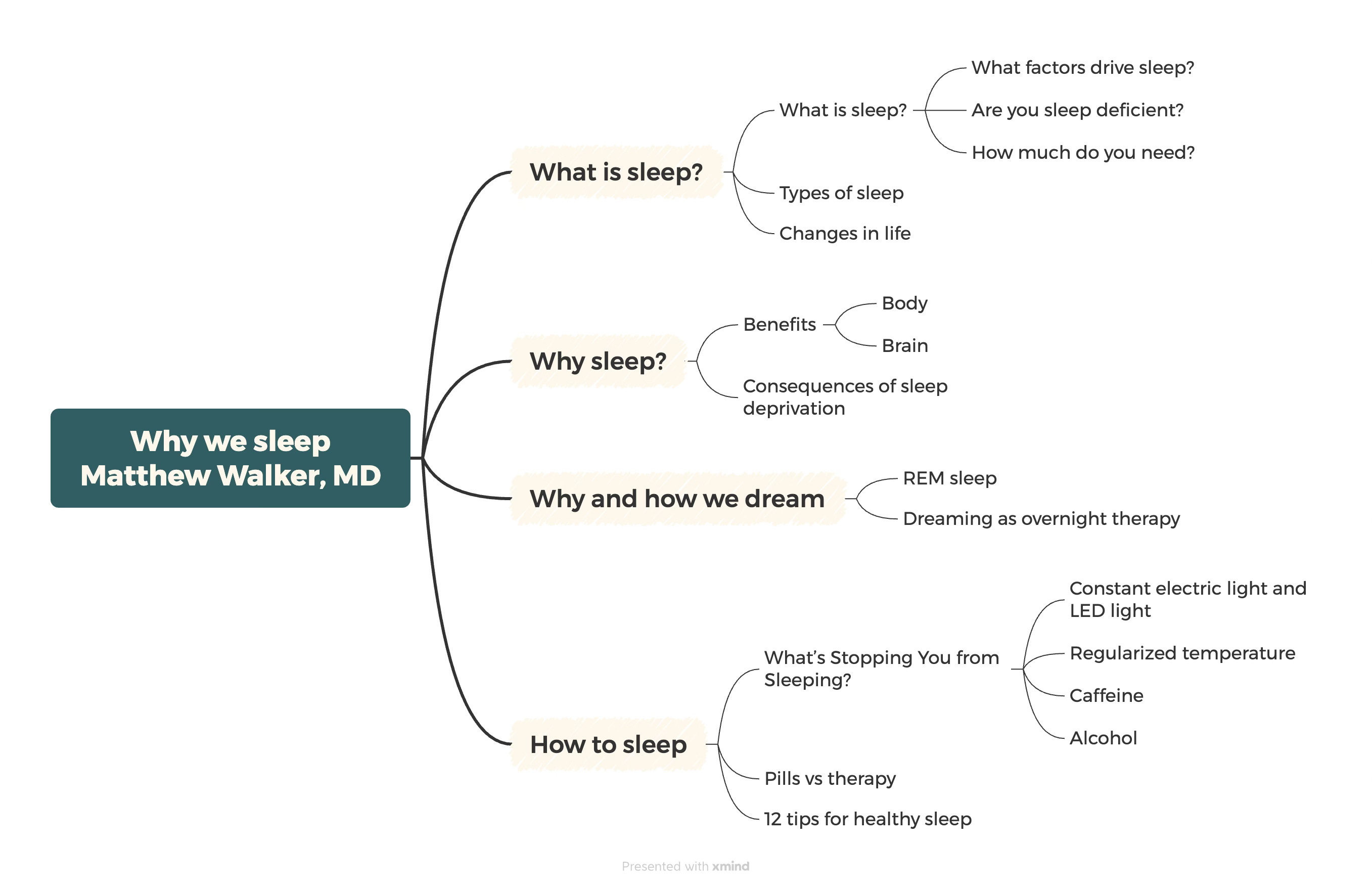
I make thorough mindmaps of the books I read (or listen to), then pull what's most impactful and actionable into the overall SAM blueprint.
You get the protocols without needing to take notes or stress about implementation. Read the books for enjoyment, context, and conviction - not as homework.
Time investment?
Why We Sleep is 368 pages, about 10-12 hours of reading (or listening). That sounds like a lot, but here’s where Flow pillar thinking helps: for nonfiction, I find audiobooks are the best thing since sliced bread… I stack them on a long walk or my commute. Ten hours becomes manageable when it’s layered onto something you’re already doing. And that allows you to disconnect from your day at work as well!
Why I Recommend Why We Sleep
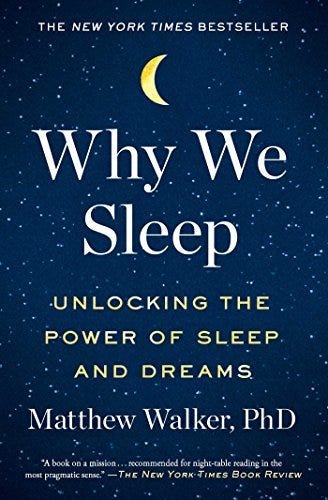
If you’re looking for the definitive book on sleep science, this is it.
Matthew Walker is a neuroscientist and sleep researcher. He’s spent decades studying how sleep affects the brain, body, and longevity. Why We Sleep is comprehensive, evidence-backed, and makes the stakes visceral in a way stats alone can’t.
What makes it worth reading
Conviction. If you’re still skeptical that sleep matters, Walker will convince you. The mortality data, the Alzheimer’s research, the metabolic consequences - it’s all there. You’ll never see an all nighter with the same eyes.
Context. The blueprint gives you the how. This book gives you the why - the mechanisms, the evolutionary perspective, the cultural critique.
Depth. Walker goes deep into the physiology of sleep. Some sections are dense (hello, suprachiasmatic nucleus), but if you love understanding how things work at a cellular level, you’ll appreciate it.
The SAM angle
Read this for the “why.” Get the “how” from the blueprint.
You don’t need to remember every detail from 368 pages. I’ve already pulled the 80/20 into the sleep blueprint - so you can read this book without the pressure of implementing it all yourself.
The Busy Woman’s Perspective
Time investment: 368 pages, ~10-12 hours.
Emotional weight: This book can be intense. Walker lays out the consequences of chronic sleep deprivation in stark terms - mortality risk, Alzheimer’s, metabolic dysfunction. For some readers, that’s motivating. For others, especially if you’re already struggling with sleep, it can feel anxiety-inducing.
A note for mothers: If you’re in the thick of early motherhood - newborns, night wakings, the whole sleep-deprived fog - this book might stress you out. And here’s what I want you to know: we are biologically designed to rear children (although you don’t necessarily need to or want to). That means not sleeping great for a period of your life. It’s temporary. Don’t let Walker’s data spiral you into guilt or panic.
As soon as you’re past that stage, build yourself (and your kids!) a good sleep foundation. It’s one of the greatest gifts you can make for them. But while you’re in it? Be kind to yourself. Your body is resilient.
Habit stack reminder: Don’t let the 10-12 hour time commitment intimidate you. Listen while walking, during your commute, or before bed (better if it’s the paper version - he even recommends this as a good sleeping habit!). I got through it on long dog walks and weekend mornings with coffee (decaf, of course).
Bottom line: Worth reading for enrichment and context—but don’t stress about implementation. That’s what SAM is for.
What Hit Me Hardest: Key Takeaways
Before I dive into the three ideas that stuck with me most, here’s a visual overview of how I distilled the book’s contents:
Sleep isn’t mere rest, it’s brain maintenance.
1. Your Brain Cleans Itself
Walker’s explanation of the glymphatic system blew my mind.
During deep sleep, your brain cells literally shrink by about 60% to create space for cerebrospinal fluid to flush out metabolic waste - including beta-amyloid proteins linked to Alzheimer’s disease.
The visual is wild: imagine your brain as a factory that produces not-so-fun byproducts all day. Sleep is when the cleaning crew comes in. Skip sleep, and the garbage piles up. Do that chronically, and you’re setting the stage for neurodegeneration decades later.
What stuck with me: This isn’t about “feeling tired.” It’s about long-term brain health. The stakes are higher than I realized. One late night here and there isn’t catastrophic, but chronic short sleep? That’s a different story.
This was one of the sections where Walker dives deep into physiology - fascinating, but also easy to space out with all the technical terms. If you’re reading (or listening), give yourself permission to skim the super-dense parts. The takeaway is clear: sleep cleans your brain. Don’t skip it.
2. Adenosine: The Sleep Pressure You’ve Never Heard Of
I knew about melatonin (thanks to all the marketing around it), but adenosine was new to me - and it completely changed how I think about caffeine.
Adenosine is a compound that builds up in your brain from the moment you wake up. The longer you’re awake, the more it accumulates. After 12-16 hours, adenosine levels peak, creating an overwhelming desire to sleep. Once you fall asleep, your brain clears it out. By morning, it’s reset.
Here’s the kicker: caffeine doesn’t give you energy. It blocks adenosine receptors in your brain, masking the signal that you’re tired. The adenosine is still there, building up. When the caffeine wears off, you crash hard because all that accumulated sleep pressure hits you at once.
What stuck with me: My husband tried to quit coffee a few years ago. He was exhausted and got debilitating headaches. Now I understand why: he didn’t realize just how tired he actually was until he stopped blocking his adenosine receptors. I didn’t go through that because I mostly drink decaf (and only on weekends).
This also explains why late-afternoon coffee sabotages your sleep. You’re blocking adenosine when your body needs to feel tired in order to fall asleep on time.
If you limit your caffeine intake to the morning, you’ll be able to feel when it’s time to sleep instead of artificially staying alert.
Walker’s explanation of adenosine vs. melatonin (the two-process model of sleep) is one of the most useful frameworks in the book.
3. REM Sleep Is Overnight Therapy (And You Can’t Catch It Up)
REM sleep - ”paradoxical sleep” because your brain looks awake on scans but your body is completely paralyzed - is when your brain processes emotional experiences and integrates new information.
Without REM, you retain the emotional charge of experiences without processing them. This is why sleep deprivation makes you more reactive, anxious, and emotionally fragile.
Here’s what I didn’t know: You can’t fully recover lost REM sleep.
REM dominates the second half of the night, especially the early morning hours (4-7 AM). If you cut your sleep short during the week - say, six hours instead of eight - you lose most of your REM. Sleeping in on weekends helps, but you don’t get back everything you lost.
What stuck with me: I used to think “catching up on sleep” on weekends was fine. But you lose REM when you cut sleep short during the week—and you can’t fully recover it. That changes the calculation. Consistency matters more than I realized.
This also explained why I’d feel emotionally raw after a string of bad sleep nights. It wasn’t just fatigue—it was my brain’s inability to process and regulate emotions properly.
This is also why I don’t adhere to 5 AM routines. We all have different chronotypes and this may work for some people, but I’m not skipping my dose of REM sleep!
What Walker Gets Right (And What Felt Off)
What He Nails
Mechanisms. Walker goes deep into how sleep works at the cellular level. The glymphatic system, the two-process model (adenosine + melatonin), the stages of sleep (NREM vs. REM) - it’s all there, and it’s thorough.
Stakes. The mortality data is stark. Chronic sleep deprivation increases your risk of Alzheimer’s, diabetes, cancer, cardiovascular disease, and early death. Walker doesn’t sugarcoat it, and for some readers, that’s exactly the kick in the pants they need.
Cultural critique. We glorify overwork and undervalue rest. Walker calls this out hard. The societal failure to prioritize sleep - schools starting too early, shift work schedules, the “I’ll sleep when I’m dead” mentality - it’s all fair game.
What Felt Dense or Off
Physiology sections. Walker is a neuroscientist, and it shows. Some sections - like the detailed breakdown of the suprachiasmatic nucleus and circadian rhythms - are fascinating but easy to space out on. If you’re not into dense science, give yourself permission to skim.
Drunk vs. drowsy driving comparison. Walker argues that drowsy driving is as dangerous as drunk driving (and the data backs this up). But the way he frames it felt off to me - like it diminished the drunk driving problem. Drowsy driving is absolutely dangerous, but drunk driving involves a conscious choice to get behind the wheel impaired. The comparison felt reductive.
Can induce anxiety. If you’re already struggling with sleep - especially mothers in the thick of night wakings - this book can feel heavy. Knowing you’re “damaging your brain” every bad night isn’t always motivating. It can spiral into guilt and stress, which ironically makes sleep worse.
Why Read It Anyway
Because even where Walker occasionally overstates certainty (some Alzheimer’s claims are correlational, not proven causal), the core thesis is rock-solid: sleep is non-negotiable for every biological system in your body.
And his storytelling makes the science stick. You won’t forget the glymphatic system after reading his description. You won’t dismiss a bad night’s sleep as “just tired” anymore.
If you need conviction this book delivers.
How This Became the SAM Sleep Blueprint
After reading Why We Sleep, I pulled the 80/20 - the interventions that actually move the needle - and built them into the sleep blueprint.
What made the cut:
Consistent sleep schedule (Walker’s #1 recommendation)
Morning sunlight exposure (resets circadian rhythm)
Appropriate bedroom environment (temperature, light, noise)
Caffeine cutoff (respect adenosine buildup)
What I left out:
The 368 pages of detailed mechanisms (fascinating, but not necessary for implementation)
The dense physiology sections (you don’t need to know the suprachiasmatic nucleus to sleep better)
The anxiety-inducing mortality stats (you get it: sleep matters)
The result: You get the actionable version without needing to remember everything.
Ready to Read?
If you want to dive deeper into the science, context, and conviction behind the blueprint, here’s the book.
Your Turn
Have you read Why We Sleep? What stuck with you most—or what felt off? Drop a comment below. I read every one.
Next week: Fuel - the second component of the Body pillar. We’re diving into glucose as the master lever for metabolic health, why food is information (not just calories), and the 80/20 strategies that actually move the needle.
See you there.
Subscribe so you don’t miss it.
This is exactly the kind of practical clarity I love — thanks for sharing it!