



We started with the Body pillar, because without physical foundations, nothing else sticks. First up was Sleep — the non-negotiable foundation.
If sleep is off, everything downstream breaks: energy, blood glucose stability, training, mood, decision-making.
This week: Fuel. Not diets. Not perfection.
Food as information, stabilizing blood sugar as the master lever, and the changes that actually move the needle.

This post sits in the Fuel area of the Body Pillar. Fuel is the metabolic lever of the Body triad: where Sleep is the foundation your cells repair themselves on, Fuel is the signal system, the instructions your body receives every time you eat. Get those signals right and the returns from Exercise compound; get them chronically wrong and no amount of training fully compensates. Glucose control, the central mechanism here, also feeds directly into the Mind Pillar, since stable blood sugar is one of the quieter inputs to mood and cognitive function.
A Word on Nutrition Science
So much ink has been spilled on nutrition science. Low-fat vs. low-carb. Keto vs. Mediterranean. Red meat kills you vs. red meat saves you. Every week, a new headline contradicts last week’s advice.
Here’s why: nutrition science has methodological issues.
Most of what you read comes from observational (epidemiological) studies. Researchers track large groups of people over time, collecting data on their eating habits and health outcomes (cancer, heart disease, etc.). The problem? These studies cannot distinguish between correlation and causation1. Correlation indicates that A and B vary together, while causation requires evidence that changes in A are responsible for changes in B.
Add to that recall bias (subjects must remember what they ate weeks or months ago - nearly impossible to do accurately) and healthy user bias (health-conscious people engage in many virtuous behaviors simultaneously, making it impossible to isolate the effect of one food), and you have unreliable data.
Newer methods like Mendelian randomization2 (using genetic variation as a proxy for randomized trials) and animal models (mice, rats, fruit flies with shorter lifespans) offer some clarity, but they come with caveats. Genetic studies are limited to specific populations, and animal results often fail to translate to humans (A 16-hour fast for a mouse is equivalent to a multi-day fast for a human due to metabolic differences.).
So what do we actually know?
Despite the noise, certain principles emerge consistently across high-quality research:
Whole, unprocessed foods outperform ultra-processed foods
Stable blood sugar matters
Fiber, healthy fats, and adequate protein are essential
Ultra-processed foods, refined sugars, and seed oils drive metabolic dysfunction
Everything beyond that is optimization - useful and interesting but not essential.
This post focuses on what we know works. Not diet dogma. Not the latest trend. Just the biology of how your cells produce energy, and what sabotages that process.
New here? Start here:

Swiss Army Mum is a practical guide to long-term health for busy women, built on four pillars: Body, Mind, Glow, and Flow.
Not every tool. Just the right ones.
Why Fuel Matters: The Metabolic Dysfunction Framework
What Is Metabolic Dysfunction?
Metabolic dysfunction is your cells losing the ability to produce and use energy efficiently. It’s a mismatch between our modern environment (ultra-processed foods, sedentary lifestyle, chronic stress) and our evolutionary metabolism (designed for whole foods, movement, intermittent food scarcity).
The modern paradox
Nassim Taleb writes about antifragility3 - systems that benefit from stress to get stronger. Our body is antifragile by nature. It’s designed for intermittent food scarcity, physical challenge, and environmental variability. Evolution shaped us to handle hunger, cold, heat, exertion. Small stressors.
Modernity removed all that: constant - and excessive - food availability, climate-controlled environments, sedentary jobs, engineered foods that require zero digestive effort. The result? Metabolic fragility.
I’m not suggesting we return to medieval living, but we do need to be mindful of how excess comfort and abundance wreck our systems. A little hunger sharpens metabolic function. A little movement builds resilience and strength. A little temperature variation strengthens mitochondria. Modern life offers none of this unless we deliberately reintroduce it.
Key metabolic dysfunction processes
Metabolic dysfunction manifests through three interconnected processes that feed each other in a vicious cycle:
Mitochondrial4 dysfunction: Chronic fuel overload damages mitochondria, reducing ATP production (low energy), driving fat accumulation inside cells, and creating cellular “starvation” despite abundant calories.
Chronic inflammation: Malfunctioning mitochondria trigger persistent low-grade inflammation, leading to progressive tissue damage, accelerated aging, and chronic disease (“inflammaging”).
Oxidative stress: Damaged mitochondria generate excess free radicals, causing widespread molecular damage to blood vessels, brain, and tissues - and reinforcing inflammation and mitochondrial failure in a self-perpetuating loop.
How metabolic dysfunction shows up
Long before a doctor ever says “insulin resistance” or “metabolic syndrome,” the body starts sending quiet distress signals. Sugar cravings ramp up, hunger never quite switches off, and energy crashes hard in the afternoon. Focus slips. Brain fog rolls in. Skin often tells the truth first: acne, inflammation, dullness, faster-than-expected aging. None of this feels dramatic enough to be “a problem,” but taken together, it’s your metabolism struggling to keep up.
Under the hood, measurable changes are already happening. Cells become less responsive to insulin, forcing the pancreas to pump out more of it just to keep blood sugar stable - hyperinsulinemia that can persist for years before fasting glucose finally rises. Excess glucose binds to proteins through glycation, damaging blood vessels, stiffening tissues, and accelerating aging in the brain and body.
These processes tend to cluster into metabolic syndrome: rising blood pressure, high triglycerides, low HDL, central fat gain, and creeping fasting glucose.
Left unaddressed, this trajectory feeds directly into the “Four Horsemen” of modern chronic disease - cardiovascular disease, cancer, neurodegeneration, and type 2 diabetes. This isn’t bad luck. It’s a slow, predictable progression.
What drives metabolic dysfunction?
As Taleb puts it: modernity.
The modern diet quietly pushes metabolism off the rails. It’s not just “too many calories,” but chronic over-nutrition layered on top of foods engineered to override satiety. Ultra-processed products - refined sugars, refined grains, industrial seed oils - deliver energy without signaling fullness, encouraging constant intake without true nourishment. Excess sugar, especially fructose and liquid sugar, overloads the liver, where it’s rapidly converted to fat and stored, driving hepatic fat accumulation and insulin resistance.
Refined carbohydrates amplify the problem by spiking glucose quickly, suppressing fat oxidation, and keeping the body locked into a sugar-burning mode. Add industrial trans fats and unstable seed oils, and you get low-grade inflammation and cellular damage. Meanwhile, the absence of real food - fiber-rich, micronutrient-dense whole foods - starves both your cells and your gut microbiome of the signals they need to regulate metabolism properly.
Modern lifestyle compounds the damage. Poor sleep - which we covered in detail last week - drives metabolic, inflammatory, and microbiome disruption. Chronic stress keeps the sympathetic nervous system switched on, driving cortisol, worsening insulin resistance, and amplifying inflammatory pathways. Long hours of sitting reduce muscle glucose uptake and erode metabolic flexibility - the ability to switch efficiently between carbohydrates and fats as fuel.
None of these factors act alone - but together, they create a metabolic environment where dysfunction becomes the default rather than the exception.
The Microbiome
Your gut microbiome - the trillions of bacteria, fungi, and other microorganisms living in your digestive tract - is not a passive bystander. It’s an active metabolic organ that influences insulin sensitivity, inflammation, nutrient absorption, and even mood regulation through the gut-brain axis.
Beneficial bacteria ferment fiber into short-chain fatty acids like butyrate, which improve insulin sensitivity and reduce inflammation. They strengthen your gut barrier, preventing bacterial fragments from leaking into your bloodstream and triggering systemic inflammation. They synthesize vitamins, regulate appetite hormones, and communicate directly with your mitochondria.
Harmful bacteria - fed by ultra-processed foods, refined sugars, and artificial sweeteners - do the opposite. They weaken the gut barrier (”leaky gut”), produce inflammatory metabolites, and worsen insulin resistance.
What you eat shapes which bacteria thrive. Ultra-processed foods starve beneficial bacteria (no fiber) and feed harmful ones (refined sugars). Whole foods do the opposite. This is one reason why whole-food diets improve metabolic health so dramatically - they restore a healthy microbiome, which in turn supports healthy metabolism.
Blood Glucose Level as the Central Metric
Why We Focus on Glucose
Glucose is the metric we focus on - not because it’s perfect, but because it’s the most practical window we have into metabolic health. The ideal marker would be insulin. Insulin resistance develops years before blood glucose ever looks abnormal, and many people with “normal” fasting glucose are already living with chronically elevated insulin.
That’s metabolic dysfunction in disguise.
The problem is that fasting insulin isn’t routinely tested, and continuous insulin monitoring doesn’t exist. Glucose, by contrast, is easy to measure, responds in real time to food and lifestyle, and stabilizing it reliably reduces insulin exposure downstream.
It’s an imperfect proxy - but the best one we’ve got.
Why Glucose Matters
Blood sugar levels matter because it acts as a master regulator. How high it rises and how fast it falls shape hunger and satiety, mood, focus, immune function, inflammation, and the pace of biological aging.
Big spikes lead to crashes, cravings, irritability, and brain fog. Repeated spikes suppress immune responses, increase systemic inflammation, and accelerate aging through glycation - where excess sugar permanently damages proteins and tissues.
The goal is simple and powerful: stabilize glucose, reduce insulin demand, and prevent metabolic dysfunction before it becomes disease.
Harmful Effects of Chronic Glucose Spikes
A blood sugar spike is typically defined as a rise of more than about 30 mg/dL (1.7 mmol/L) after eating. In the short term, this shows up as the familiar post-meal crash, sugar cravings, foggy thinking, irritability, and hunger shortly after you’ve eaten - often driven by an insulin overshoot that pushes glucose too low.
Over time, the damage runs deeper. Mitochondria are flooded with fuel and respond by producing excess free radicals, creating oxidative stress that damages DNA and cellular machinery. Excess glucose binds to proteins, forming advanced glycation end-products that stiffen tissues, damage blood vessels, and impair brain function. Together, oxidative stress and glycation drive chronic inflammation and force the pancreas to pump out ever-higher levels of insulin, gradually pushing cells into insulin resistance and locking in fat storage.
This progression is slow, quiet, and easy to miss. You can spend years with a “normal” fasting glucose while post-meal spikes regularly hit 160–180 mg/dL. The damage accumulates in the background.
By the time fasting glucose crosses the clinical threshold for pre-diabetes, metabolic dysfunction has usually been brewing for a decade. The diagnosis comes late. The biology does not.
Whole Foods vs. Ultra-Processed Nightmares
The pattern across cultures is remarkably consistent. Diets associated with long-term metabolic health all tend to flatten the glucose curve. Traditional Mediterranean diets in Greece, Italy, and Spain. Pre-Westernized Asian diets like those of Japan and Okinawa. Whole-food plant-based approaches. Even ancestral or paleo-style diets - when they’re built around real food rather than processed “health” products. Different cuisines, different philosophies, same metabolic outcome: stable blood sugar and low insulin demand.
What these diets share matters more than what they’re called. They’re anchored in whole, minimally processed foods. They’re naturally high in fiber from vegetables, legumes, and intact grains. They rely on healthy fats like olive oil, nuts, and oily fish, include protein, and keep added sugars and refined grains to a minimum.
These features slow digestion, blunt glucose spikes, and give cells the nutrients and signals they need to regulate energy properly.
In contrast, metabolic dysfunction thrives on the opposite pattern. The standard Western diet - and any diet dominated by ultra-processed foods - creates a glucose rollercoaster: high in added sugars, refined carbohydrates, and industrial seed oils, and chronically low in fiber and micronutrients. The result is rapid spikes, hard crashes, constant hunger, and escalating insulin exposure.
The 80/20: Five Principles That Flatten the Curve
To stabilize blood sugar naturally, prioritize whole unprocessed foods, cut added sugars and seed oils, eat adequate protein and healthy fats with every meal, consume plenty of fiber daily and time your eating window. These five principles reduce glucose spikes, lower insulin exposure, and prevent metabolic dysfunction.
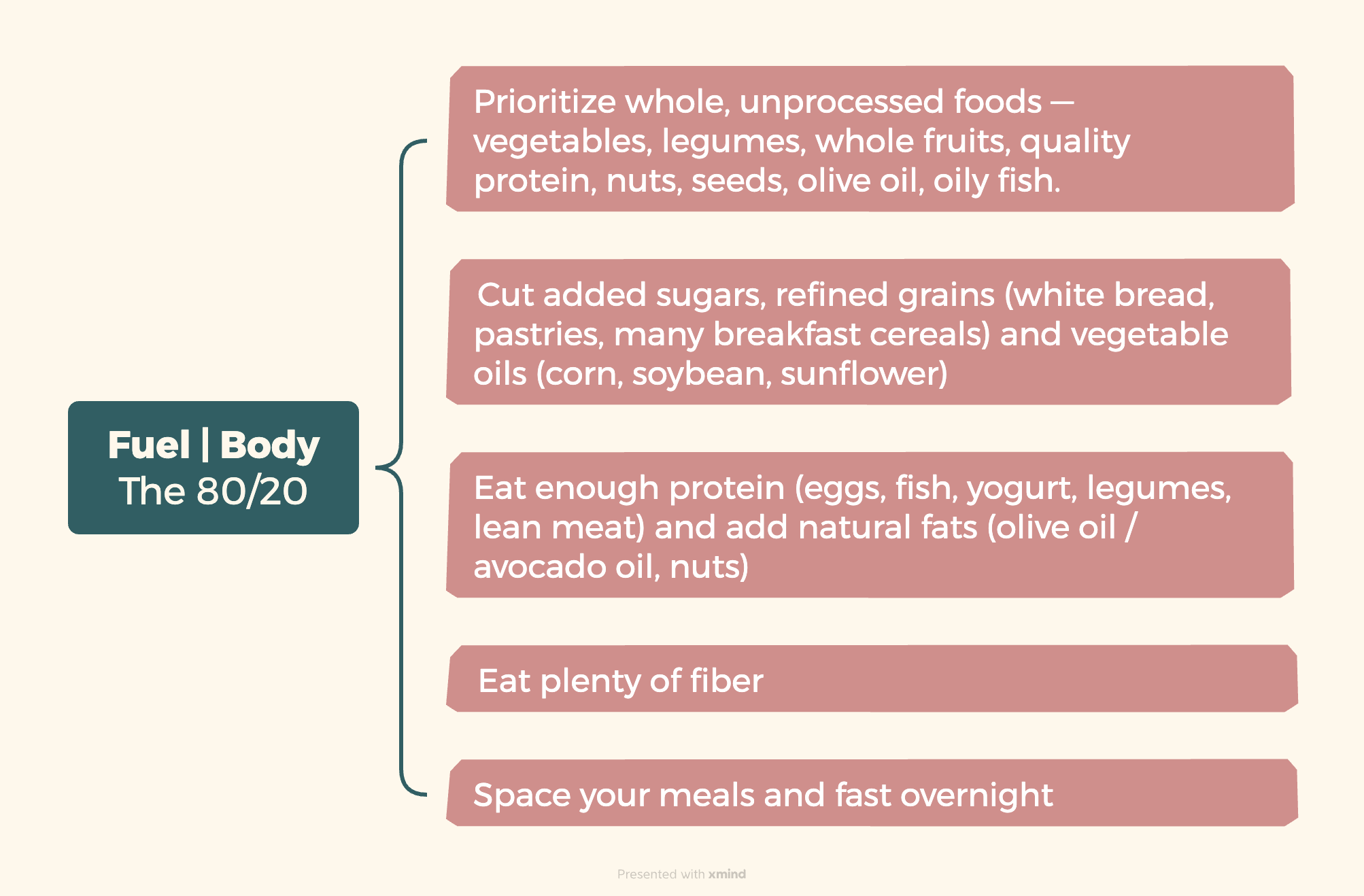
Principle 1: Prioritize Whole, Unprocessed Foods
What: Vegetables, legumes, whole fruits, quality protein, nuts, seeds, olive oil, oily fish
Why: Ultra-processed foods are engineered to bypass satiety signals. They’re stripped of fiber and micronutrients, designed to make you overeat. They spike glucose, overload mitochondria, and starve beneficial gut bacteria. Whole foods provide what your cells actually need: fiber, vitamins, minerals, polyphenols, omega-3s. They’re naturally satiating, nutrient-dense, and support a healthy microbiome.
How to identify minimally processed foods:
Here’s a simple rule of thumb: eat the ingredients, not food with a list of ingredients. Chicken breast is the ingredient. Chicken nuggets with twenty ingredients you don’t recognize are a processed food.
Shop the perimeter of the grocery store. The outer edges are where whole foods live: produce, meat, dairy, eggs. The center aisles are where ultra-processed products hide. Spend eighty percent of your time and budget on the perimeter.
Principle 2: Cut Added Sugars, Refined Grains, and Seed Oils
What to cut: Added sugars (soda, juice, sweetened coffee, desserts, granola bars, “healthy” protein bars, flavored yogurt), refined grains (white bread, pastries, most breakfast cereals, white rice, crackers), and seed oils (corn, soybean, sunflower, canola - swap for extra-virgin olive oil, avocado oil, or coconut oil).
Why: These three are the primary drivers of glucose spikes, insulin resistance, and inflammation. They’re everywhere in ultra-processed foods, so avoiding them naturally pushes you toward whole foods.
Special focus on liquid sugar
Soda, juice, smoothies, sweetened lattes, and energy drinks are the fastest route to insulin resistance and fatty liver. Fructose in liquid form bypasses normal glucose regulation and goes straight to the liver, where it’s rapidly converted to fat.
What to drink instead: Nassim Taleb has a rule I love: “only consume drinks that are at least a thousand years old”. Water. Tea (green, black, herbal). Coffee (black, or with minimal milk or cream - no sugar). Wine in moderation. Kombucha.
If it was invented in the last century - soda, energy drinks, vitamin water, fruit juice, cocktails - skip it.
Principle 3: Eat Enough Protein, Add Natural Fats
What: Protein sources include eggs, fish, Greek yogurt, legumes, poultry, and grass-fed meat. The RDA of 0.8 g/kg body weight is a survival minimum designed to prevent deficiency, not a target for thriving. Most active adults do better with 1.2–2.2 g/kg depending on age and activity level. For fats, prioritize extra-virgin olive oil, avocado, nuts, seeds, and oily fish like salmon, mackerel, and sardines.
Why: Protein and fat together slow glucose absorption and increase satiety. They blunt the glucose spike from carbs, keeping your blood sugar stable. Protein also preserves muscle mass, and muscle is a glucose “sink” - it absorbs glucose without requiring insulin. The more muscle you have, the better your metabolic health. Monounsaturated fats from olive oil and avocado improve insulin sensitivity. Omega-3s from oily fish, walnuts, and flaxseeds reduce inflammation, support brain health, and improve mitochondrial function.
Principle 4: Eat Plenty of Fiber
Target: 25-50 grams per day. Start where you are and increase gradually - sudden jumps cause digestive distress like bloating and gas.
Sources: Vegetables, especially leafy greens, broccoli, and Brussels sprouts. Legumes like lentils, chickpeas, and black beans. Whole fruits like berries and apples with the skin on. Chia seeds, flaxseeds, psyllium husk.
Why it matters: Fiber slows glucose absorption by creating a physical barrier in your gut. Think of it like this: when you eat a salad before pasta, the fiber from the vegetables forms a mesh that slows down glucose absorption from the pasta. Same meal, same calories, dramatically different glucose response. Fiber also feeds beneficial gut bacteria, which produce short-chain fatty acids that improve insulin sensitivity. And it increases satiety - you feel full longer, reducing the urge to overeat.
Start every meal with vegetables if you can. It’s the easiest habit to implement because you’re just rearranging what’s already on your plate.
Principle 5: Space Your Meals and Fast Overnight
What: Eat at regular intervals (3-4 hours between meals), finish eating 2-3 hours before bed, and don’t snack until morning. This creates a natural 12-14 hour overnight fast without aggressive time restriction. This aligns with your circadian rhythm—insulin sensitivity naturally decreases in the evening as melatonin rises, so eating late compounds the problem.
Why: Constant grazing prevents your stomach from emptying fully and keeps insulin chronically elevated. Your digestive and hormonal systems need regular rest to function optimally. However - and this matters especially for women - aggressive fasting protocols can backfire.
Caloric restriction extends lifespan in animals (yeast, worms, mice), and that’s led to enthusiasm for intermittent fasting in humans. The problem? Studies in humans show mixed results, and emerging research on women specifically suggests that prolonged fasting windows may disrupt menstrual cycles, increase cortisol, and paradoxically worsen insulin sensitivity in some women.
Pro Tip: The “Kitchen Closed” Rule
Set a time when the kitchen closes for the night (e.g., 7 PM). After that: water, herbal tea, or nothing. No exceptions. Makes the decision automatic - no nightly willpower battles.
SAM Brief
The compressed reference guide for everything in this post. Key mechanisms, practical levers, and what to prioritise, all in one page.
Self assessment
Are You Metabolically Healthy?
Answer yes or no:
Do you crash two to three hours after meals? Do you crave sugar or need snacks between meals? Do you rely on caffeine to function in the afternoon? Do you wake up hungry or feel “hangry” often? Do you struggle with brain fog, especially mid-afternoon? Do you have trouble losing weight despite “eating healthy”? Do you feel tired despite getting enough sleep?
If yes to two or more, your glucose is likely spiking and crashing.
The 80/20 above will fix this.
The next level
Here’s what we know works: whole foods, stable glucose, protein, healthy fats, plenty of fiber, letting your system rest.
Everything beyond that is optimization - useful and interesting, but not essential.
The 80/20 alone will already do wonders for your metabolic health.
Here’s where you can dig deeper afterwards:
Why Your Glucose Response is Unique
When researchers put continuous glucose monitors on thousands of people, they discovered something surprising: identical foods produced wildly different responses. One person’s glucose spiked from bananas but stayed flat after ice cream. Another showed the opposite pattern. Your unique response depends on genetics, gut microbiome, sleep quality, stress levels, even meal timing. This is why some people thrive on rice while others do better with potatoes. Why intermittent fasting works brilliantly for some and backfires for others (hello female hormones?). The fundamentals still apply universally—but personalization matters.
The good news? You don’t need a research lab to figure out what works for you. Jason Fung’s The Obesity Code explains the insulin resistance mechanism that underlies why different foods affect people differently. Jessie Inchauspé’s Glucose Revolution offers ten practical hacks to flatten your curve regardless of what you eat—food order, vinegar timing, post-meal movement windows, why dessert after dinner beats an afternoon snack. Eran Segal and Eran Elinav’s The Personalized Diet shows you how to test your own biology using simple tools. And for women whose bodies stopped responding to traditional approaches? Sara Gottfried’s short-term ketogenic protocol offers a targeted reset when declining hormones make standard interventions less effective.
I’ll synthesize all four into one post: understand the mechanism (insulin), implement universal strategies (the ten hacks), test what’s unique to you (personalized experimentation), and deploy advanced interventions only when needed (strategic keto). Plus my own two-week CGM experiment - what spiked me, what didn’t, and what I changed because of the data.
The Blood Tests Your Doctor Isn’t Ordering, But Should
Fasting glucose is a lagging indicator - by the time it’s abnormal, dysfunction has been brewing for years. We’ll cover what to test, what optimal ranges actually are (not just “normal”), and how to use these as feedback loops.
I’ll show you the Google Sheet tracker I built to monitor my metabolic health over time.
References & Further Reading
This post synthesizes insights from multiple sources. If you want to go deeper into any aspect of metabolic health and nutrition, check out my Book Club post.
What’s next?
Next week: Deep Dive into your personal glucose response. We’ll synthesize The Obesity Code, Glucose Revolution, The Personalized Diet, and the Gottfried Protocol into one cohesive story - plus my CGM experiment results.
After that: Gut health and how I brew my own Kombucha, gaining clarity over your metabolic health and how to track it easily (I’ve done it for you!).
We’re in for a fun ride! Make sure you fuel properly 😉.
Subscribe so you don’t miss it.
Thank you!
If you made it this far, congratulations! You now have an understanding of why metabolic health is important and how to tweak your eating habits to get there.
Thank you for reading, sharing, and supporting this work. Whether you’ve been here since the beginning or just found Swiss Army Mum, I’m glad you’re here.
Building sustainable health without overwhelm takes a village. If something resonated with you, I’d be grateful if you forwarded this to someone who might benefit or hit the ♥️ or ↻ Restack button. It helps more people discover this space and build sustainable health without the overwhelm.
See you next week!
Your turn
What’s your biggest Fuel challenge right now? Sugar cravings? Afternoon crashes? Confusion about what actually counts as “healthy”? Comment below—I read every one.