


The sound knitting needles make against each other is not quite a click. It is softer than that. A small repeated percussion that you stop noticing after the first few rows, the way you stop noticing the sound of rain.
It was a Saturday afternoon. The playlist was Relaxing Piano on Spotify, which I am slightly embarrassed to admit and entirely unrepentant about. The yarn was alpaca, anthracite, and it had a particular way of sliding across my index finger (cool at first, then warming) with a resistance just substantial enough to feel like something and to let me keep an even tension. The pattern was a cable repeat: cross four, knit four, cross four, knit four. The same sequence, dozens of rows, over and over for weeks. After a while, you do it by looking at the garment. No need of checking the pattern.
My father still wears the vest.
I did not make it because I needed a creative outlet or a mindfulness practice or a screen-free hobby. I made it because I needed to do something with my hands that did not require me to think, and the cable pattern was exactly complicated enough to prevent me from thinking about anything else. That is not a small thing. That is, as it turns out, most of the mechanism.
That, and the fact of making something with my own hands. Something I could have bought for not much. And gifting it to someone you care about. The time you poured in it is what makes it so much more valuable that a 200$ cashmere sweater.
That’s why knitting has been one of my go-to wholesome activity for years.
This is the companion post to The science of rest post, which covers what the research says about why these activities work. I will not repeat the theory here. One line of science per activity is enough: a signpost for anyone who wants the evidence, not a lecture for those who do not.
This post sits within the Stress Management, Resilience and Self-Care area of the Mind pillar. It is not a blueprint or a zoom post. It is a look inside.
This is not a prescription and it is not an aesthetic. It is just what I actually do, imperfectly and consistently, and what I have noticed about why it works.
The internet, and in particular the particular corner of it you visit when you are tired and should probably be sleeping, will show you mandala dot painting, zen gardening, neurographic art, pottery, macramé, and seventeen variations of journaling that all require a specific type of pen. Most of this is consumption dressed as creativity. You buy the supplies, you do it twice, and then the kit lives in a cupboard next to the bread maker and the spiraliser. That is not a character flaw. It is just how novelty works.
But occasionally something grips you. You do not choose it so much as it refuses to leave. It shows up in the back of your mind when you are doing other things. You find yourself thinking about the next session, the next project, the next problem to solve within the constraints of the medium. When that happens, you have found something worth protecting: not because it looks impressive or photographs well, but because it has become part of how you think about yourself. That is a different thing entirely from a hobby you perform.
Let go of the pressure to make beautiful things. The vest I made my father is not technically perfect. The cables drift slightly in places where I lost count and refused to frog back. He wears it constantly. The point was never the vest.
New here? Start here:

Swiss Army Mum is a practical guide to long-term health for busy women, built on four pillars: Body, Mind, Glow, and Flow.
Not every tool. Just the right ones.
The science behind why these activities work is in a different post, if you want the full version. The short version: your brain has two attention systems. The directed one (the one that runs decisions, planning, and everything that requires effort) fatigues across the day and needs specific conditions to recover. Not sleep, not scrolling, not collapsing in front of the television. Something absorbing enough to crowd out rumination, low-demand enough that the directed system can go offline, with no performance stakes attached.
Knitting, baking, walking by water, tending something that grows. These are not indulgences. They are the conditions under which the part of you that does everything else gets to rest.
My wholesome activities
Reading Mostly Science Fiction and Fantasy
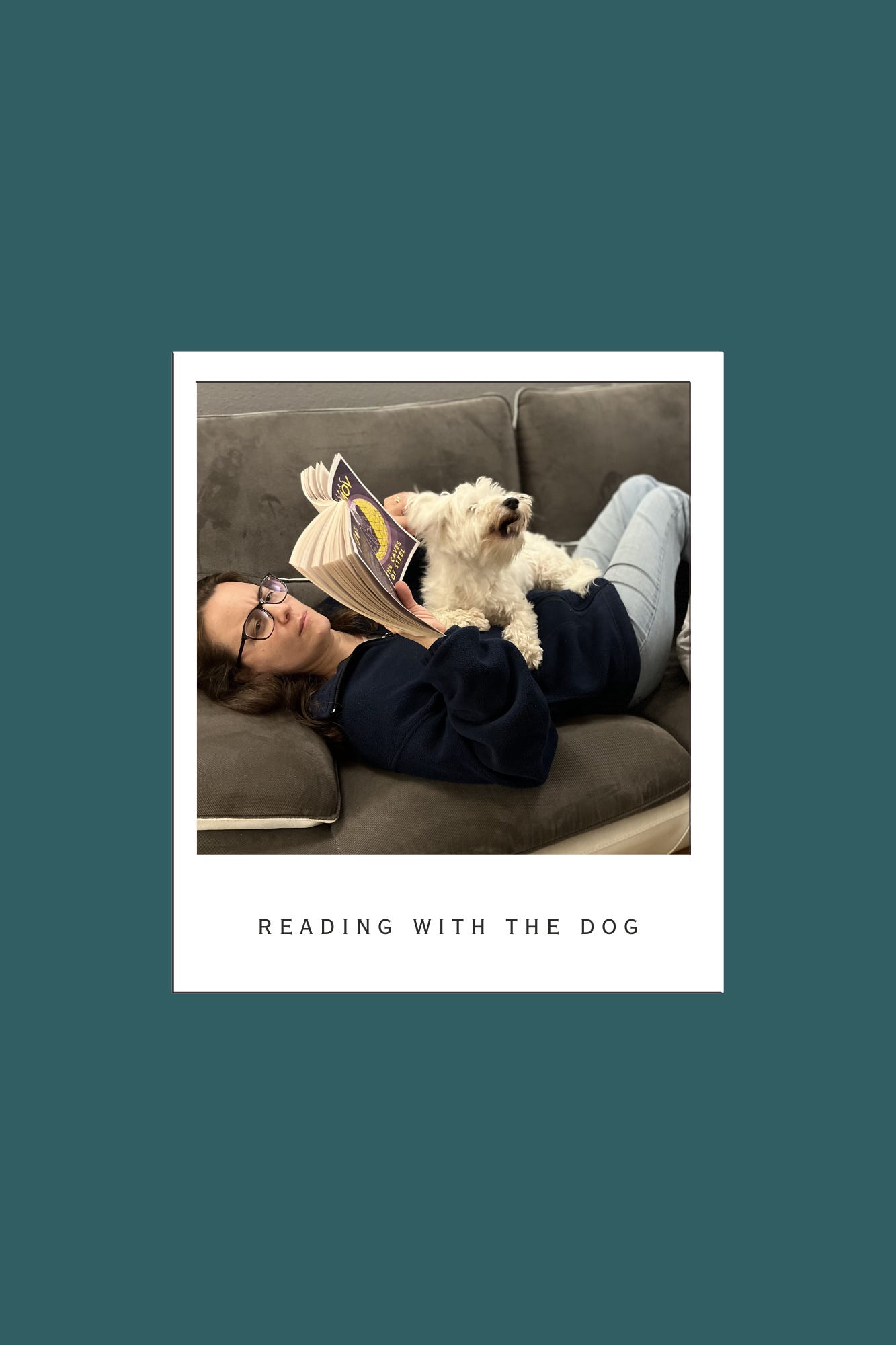
I started with the classics (Tolkien, Asimov) when I was a teenager, and that was it. Something about those books got into the architecture of how I think and never left. I am not a compulsive reader. I read less than I would like, and I have made peace with that. But when I find the right book, there is nothing quite like the feeling of falling into another world entirely: another set of rules, another set of stakes, another life that is not mine for three hundred pages.
The thing nobody prepares you for is the grief when it ends. Not disappointment exactly, but something closer to losing a friend you really loved. The world closes. The characters stop existing in real time. You are left with all the good memories and no way to make new ones.
Knitting
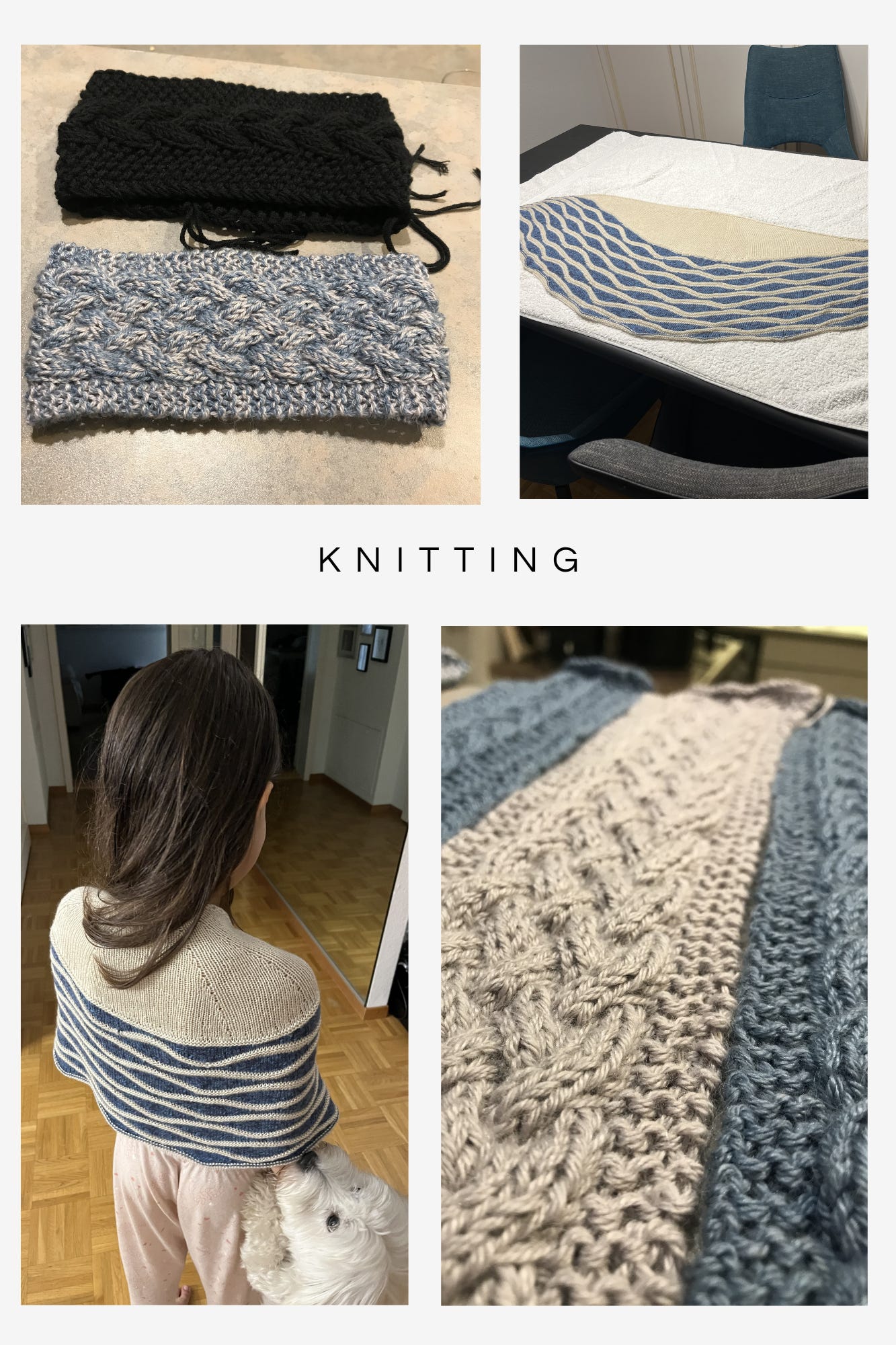
I taught myself from YouTube, which is how I teach myself many things. The learning curve is real (my first project was a dishcloth and it looked like something that had survived a minor incident) but once the hands learn the motion, it becomes a different kind of activity entirely. Not making something. Thinking through your hands.
I have knitted baby blankets, sweaters, ear warmers, and one unfortunate hat that shall not be discussed. What I enjoy most are smaller knits with elaborate patterns: cables, lace, anything that requires enough attention to keep me present but not so much that I need to count under my breath. Knitting comes and goes. I tend to reach for my circular needles towards the end of summer, when I am done with the heat and starting to look forward to cosy evenings. It comes back every year, reliable as the season.
The vest in the opening scene is still in rotation at my father’s house. The cables drift in places. He does not appear to have noticed, or has decided not to mention it. I mend it from time to time.
Baking
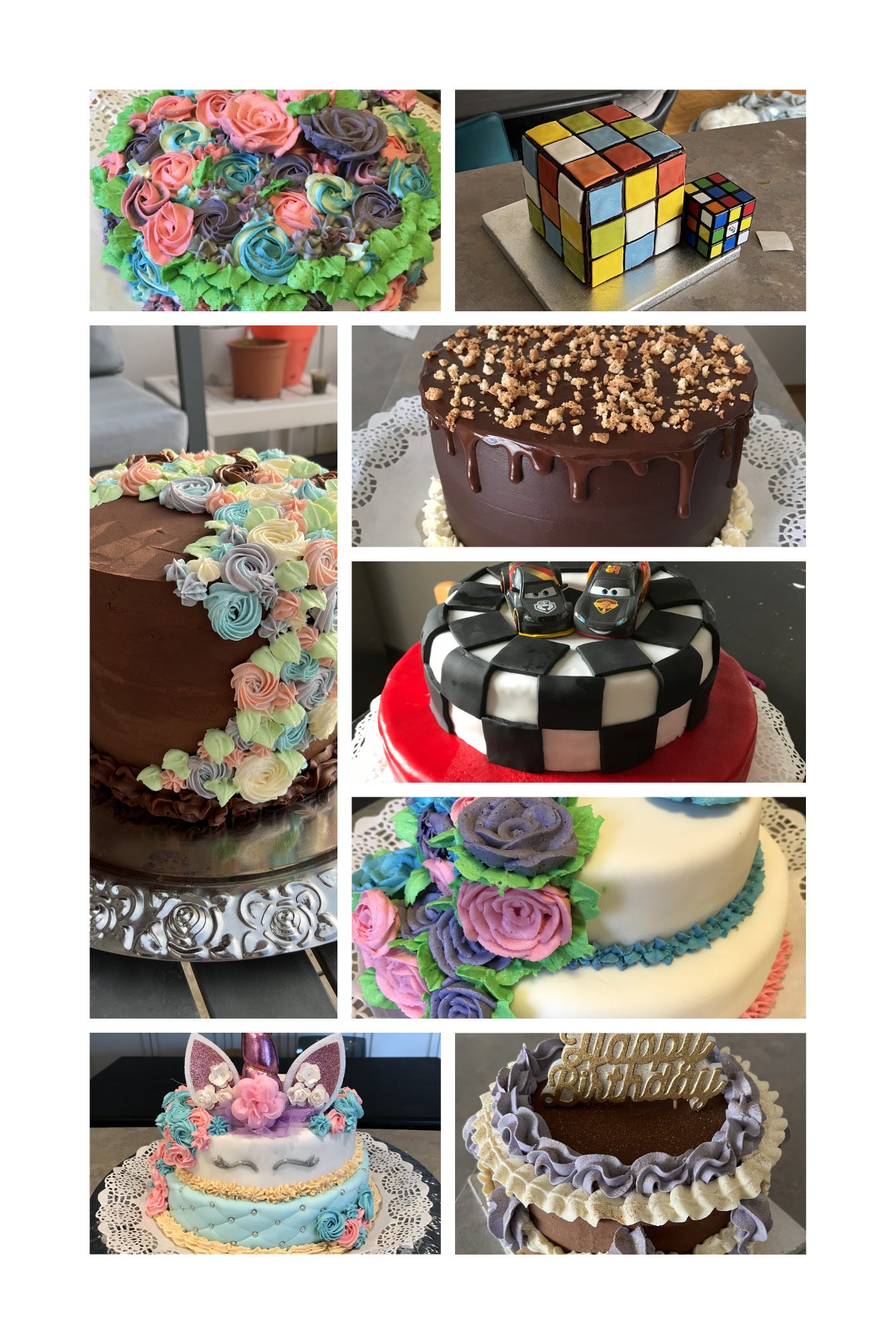
It started with birthday cakes. My children needed birthday cakes, and at some point I decided I would make them rather than buy them, and then I could not stop. It became a tradition, then a practice, then something I do far less often than I would like. The metabolic health of this family being what it is, I cannot bake a cake every week just because I want to.
Self-taught, as with most things. YouTube is genuinely extraordinary if you let it be. There is something specifically satisfying about baking that I do not get from other cooking: the precision of it, the way temperature and time are not suggestions but actual variables, the moment when you open the oven and either you have bread or you have a lesson. It involves the hands, it requires presence, and at the end there is something real on the table.
And they’re just pretty.
Fermenting Things
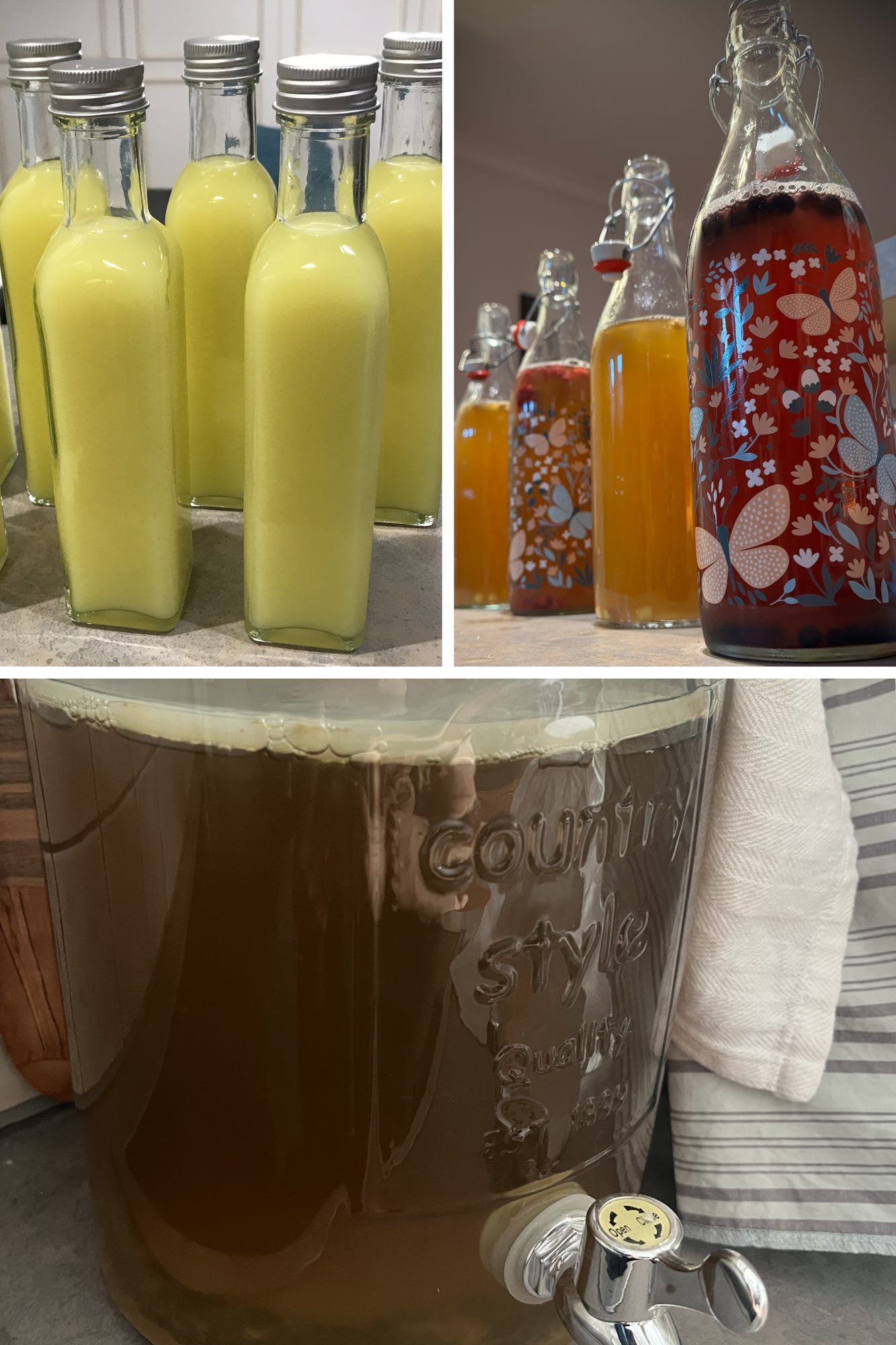
This one requires a brief defense, because it sounds either very on-trend or very unhinged, and I am aware it may be both.
I brew kombucha. I make sourdough pizza. I have made kimchi, yoghurt, and at least one thing that did not survive the experiment and was composted with dignity. There is something extraordinary about reproducing foods that are thousands of years old. Techniques that predate refrigeration, predate written recipes, predate most of what we think of as food culture. And discovering that they are not only edible but genuinely among the best things you can eat. Nassim Taleb has a rule I have adopted entirely without irony: do not drink anything less than a thousand years old. Water, kombucha, kefir, wine, vinegar, tea, coffee. The ancients were onto something.
Walking the Dog, Especially by the Lake
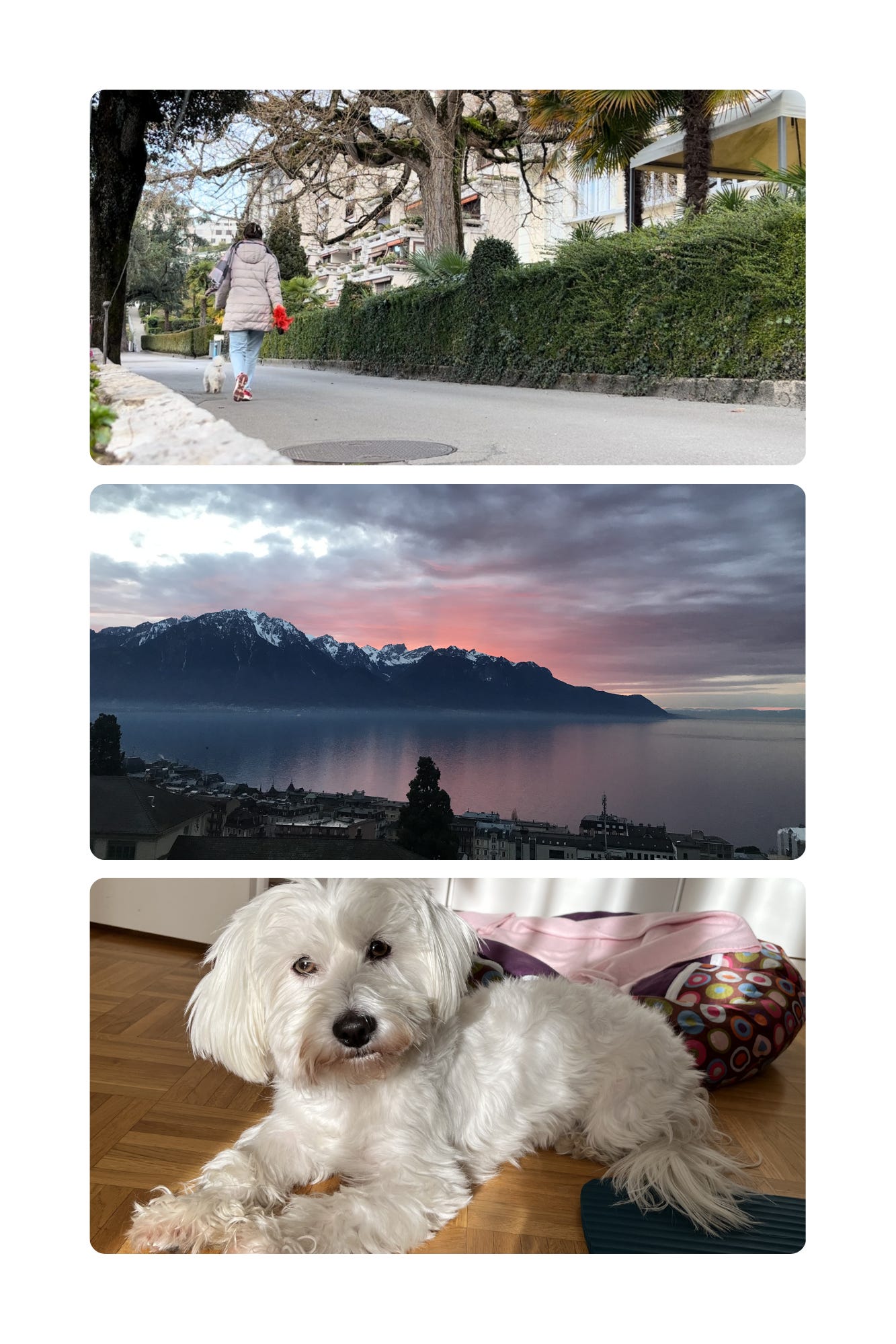
We live in Switzerland, which means the natural settings are almost aggressively beautiful. Mountains, forests, clear water: the kind of landscape that appears in the backgrounds of Renaissance paintings and on the packaging of expensive chocolate. I am not, it turns out, particularly drawn to mountains. I am drawn to water. Don’t get me wrong. They’re beautiful and eternal, but I prefer to admire them at a distance.
I grew up by the South Atlantic in Argentina. The ocean was always there, enormous and constant and indifferent to whatever was happening on land. Something about that scale stayed in my nervous system. In Switzerland I do not have the ocean, but I have the lake, and it is enough. We walk there most mornings, my dog and I. Water moves. It changes colour with the light and the weather and the season. Mountains are near eternal on a human timescale, they will look the same when I am gone. The lake was different yesterday. I find that easier to be near.
Trying to Garden on the Terrace
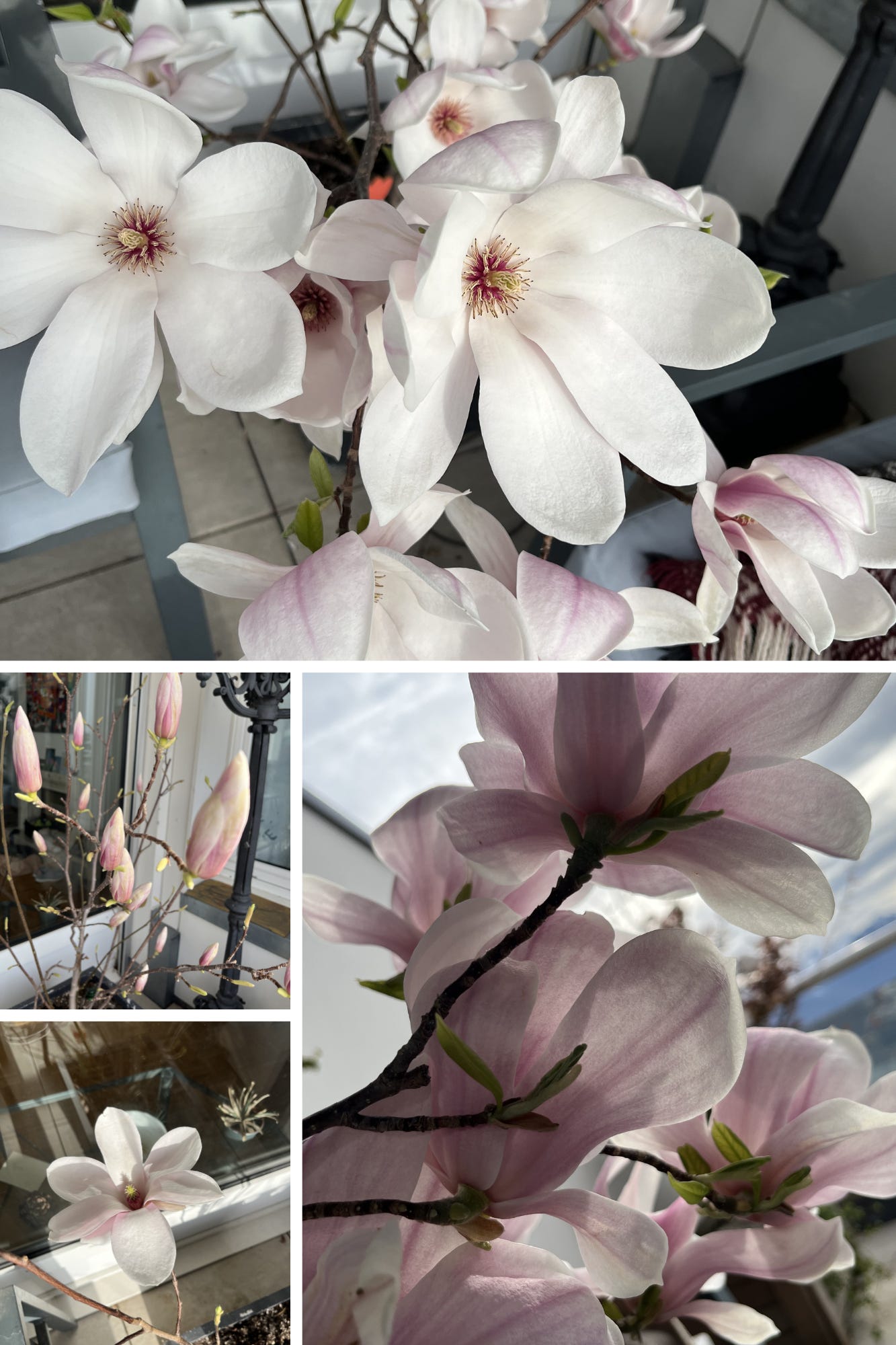
I am, objectively, not a natural gardener. The terrace gets ferociously hot in summer, I forget to water things, and I have killed enough basil plants to fill a small cemetery. This is a standing joke in the family and I have made my peace with it.
And yet. This spring the magnolia gave twenty-four flowers. Twenty-four. I counted them. The terrace looked, for a few weeks, genuinely beautiful — the kind of beautiful that you notice each morning as something specific rather than as background. That kind of reward is disproportionate to the effort, and it is entirely the point. You do not garden because you are good at it. You garden because something grows occasionally despite you, and that is quietly astonishing.
Crochet: The Newest One
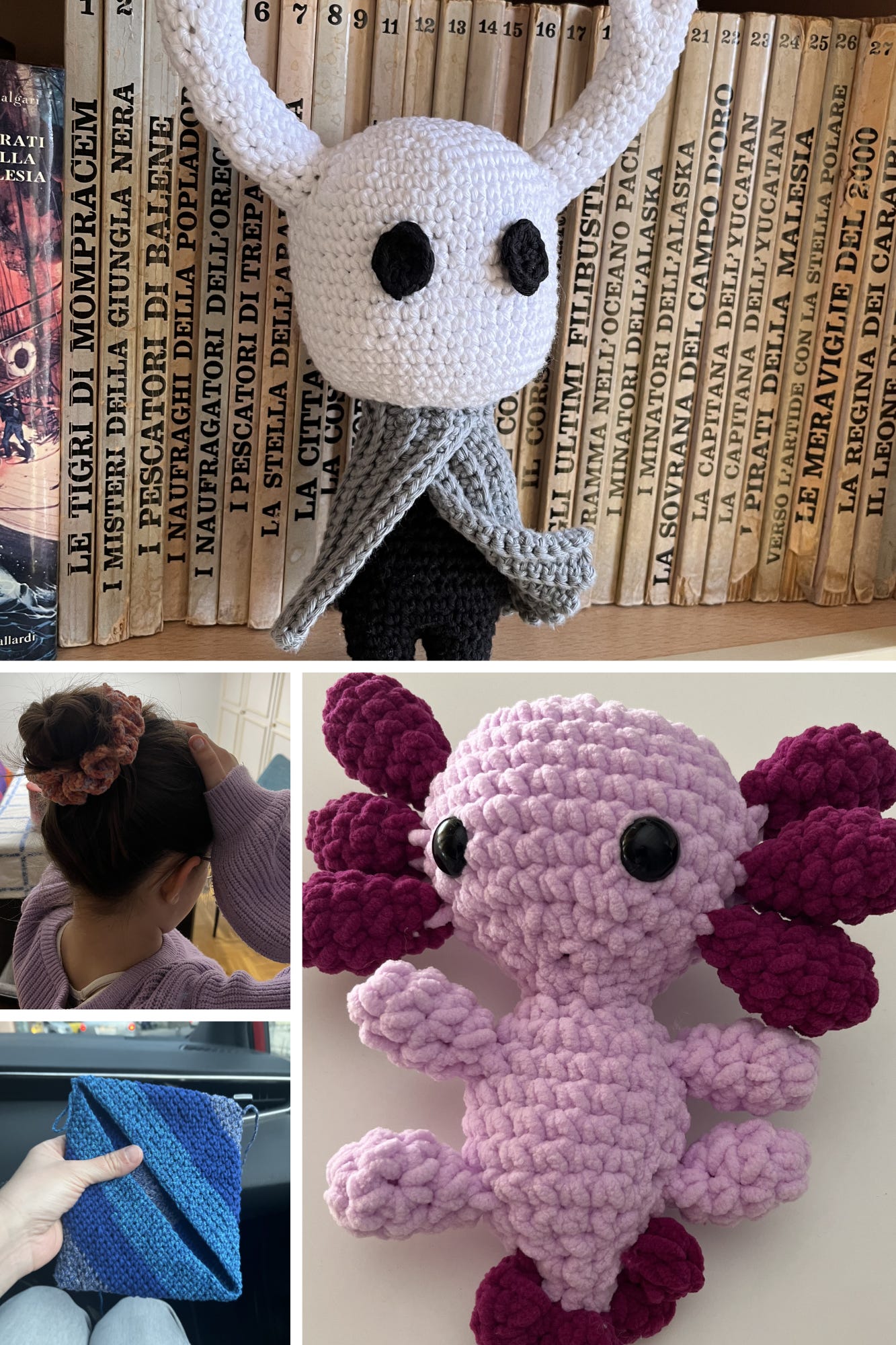
I resisted crochet for twelve years. I could not tell you why, exactly. I think I had decided, without much evidence, that I was a knitting person. These are different things.
What changed it was my daughter asking me to teach her to make an amigurumi axolotl. For those not familiar: amigurumi is the Japanese art of crocheting small stuffed creatures, and an axolotl is an aquatic salamander with the expression of something that has given up trying to understand the world but has decided to be cheerful about it anyway. I did not know how to crochet. I learned with YouTube, as one does, went down a rabbit hole I did not anticipate, and have not fully emerged. I now have a pin on my knitting bag that reads: Crochet, because murder is wrong.
It is not far from knitting technically, but it is completely different in practice. Knitting is rows and rhythm. Crochet is architecture: you build things in three dimensions, you construct shapes, you make objects rather than fabric. I am very much a beginner. My axolotl has a crooked head and an expression of resigned surprise. My daughter loves it.
On Not Optimizing Any of It
There is a particular kind of content that appears when you spend too long in wellness-adjacent corners of the internet: the person who has turned every restorative activity into a system. The knitting with the project tracker and the yarn inventory spreadsheet. The sourdough with the hydration log and the fermentation temperature chart. The morning walk with the heart rate zones and the step count and the mindfulness app running in the background to make sure the restoration is being done correctly.
I understand the impulse. I have a PhD in chemical engineering. I have spent my professional life measuring things. If something is worth doing, there is a version of my brain that immediately wants to know if it is being done optimally.
That version of my brain is wrong about this.
The mechanism that makes these activities restorative is specifically the absence of performance stakes. The moment you introduce a metric (even a benign one, even one you are only tracking out of curiosity) you have changed the activity. It is no longer a space where you are allowed to be bad at things and not care. It is now a space where there is a correct answer. The knitting becomes a project. The walk becomes a workout. The bread becomes an experiment with a hypothesis.
I do not photograph most of what I make. I do not log the fermentation batches or the knitting hours. My gardening notes consist of “forgot to water, survived anyway” and “do not buy petunias again.” The twenty-four magnolia flowers this spring were not tracked. They were just there, in the morning, and I stood in front of them for longer than I needed to before I went inside.
The kombucha does not care if you are optimising. The axolotl does not know its eye is crooked. Protect the space where those things are true.
The 80/20
Honestly, this section is harder to write than the rest of the post, because the honest answer is: I protect less of this than I should, and more than I used to, and that is probably where most people are.
What I actually manage consistently: the morning walk, most days, with the dog, without the phone. Twenty minutes or more. Sometimes less. The lake when I can get there, the streets when I cannot. That one is the closest thing I have to a non-negotiable.
What I reach for when I need it: the circular needles come out at the end of summer and stay out until spring. The kombucha has been continuous for three years. The baking happens in bursts: four weekends in a row and then nothing for six months.
What slips most easily: the reading. I read far less than I would like. I have accepted this about myself with moderate grace.
The 80/20 for you is probably not my list. It is the one thing in your own list that costs almost nothing to do and returns disproportionately. The activity that, on the days you manage it, makes the rest of the day subtly different. Find that one. Protect it first. Add the others when the first is stable.
And if you do not have a list yet: try things. Wait for the one that refuses to leave.
Your Turn
What are yours?
Not the list you think you should have. The actual one: the imperfect, inconsistent, quietly restorative things that you reach for when the week has been too much.
Drop them in the comments. I read every one, and I would genuinely like to know.
Thank you
Thank you for reading, sharing, and supporting this work. Whether you’ve been here since the beginning or just found Swiss Army Mum, I’m glad you’re here.
Building a life with more intention takes a village. If something resonated, I’d be grateful if you forwarded this to someone who might need it, or hit the ♥️ or ↻ Restack button. It helps more people find this space.