


Your Brain’s Messengers
This is Part 3 of a 4-part deep-dive series on the brain.
We have covered the Brain Blueprint, Brain Health: A User’s Manual, then zoomed in on perimenopause brain fog and on the lifestyle levers that protect your brain.
This mini-series breaks down the parts of brain health that deserve more than a paragraph:
Part 1: Perimenopause Brain Fog. Whether it’s real, whether it lasts, the Alzheimer’s question, and HRT
Part 2: Lifestyle Levers. The evidence behind each lever, and how to actually do it
Part 3 (this post): Your Brain’s Messengers. Dopamine and serotonin, their colleagues, and whether “boosting” them is a good idea
Part 4: Brain Training. A collaboration on what those brain games can and can’t tell you
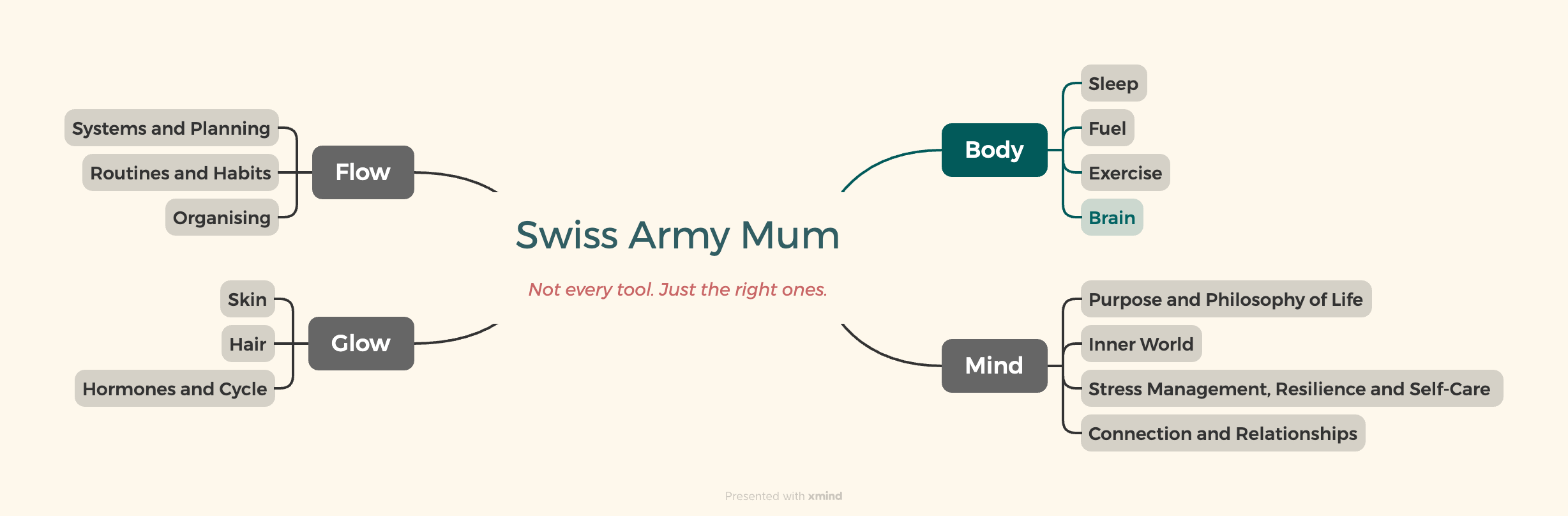
This post sits in the Brain area of the Body Pillar, one level down from the four systems in the Blueprint. If the power grid, roads, night shift and construction crews keep the brain running, neurotransmitters are the messages travelling through it. This is also the post where the Brain area brushes up against the Mind Pillar: mood, motivation and stress all run on these messengers. It’s short on purpose. Its main job is to clear away the myths, so the levers from Part 2 make even more sense.
The Happy Chemicals Cheat Sheet
You’ve seen the infographic. Four smiling molecules: dopamine for pleasure, oxytocin for love, serotonin for happiness, endorphins for pain relief. Underneath, a list of hacks. Cold plunge for a dopamine surge. Bananas for serotonin. A “dopamine detox” weekend to reset your brain.
It’s shareable, but improvable.
Before we start: this is a simplified panorama, not the full picture. Each of these molecules does dozens of jobs. Every job involves several of them. What a messenger does depends on where it’s released, which receptors pick it up and how fast it’s cleared. Think of this post as an overview, not a neuroscience class.
This post breaks down what the main messengers actually do, what midlife does to them, which popular claims don’t hold up, and what’s actually worth doing.
New here? Start here:

Swiss Army Mum is a practical guide to long-term health for busy women, built on four pillars: Body, Mind, Glow, and Flow.
Not every tool. Just the right ones.
Why It Matters
The labels mislead you
Neurotransmitters aren’t mood levels in a tank that you top up. They’re signals. “Dopamine equals pleasure” and “serotonin equals happiness” sell content, but they point you toward the wrong fixes: chasing spikes instead of supporting the system.
Midlife changes the chemistry
Estradiol, the main form of estrogen, influences serotonin, dopamine, acetylcholine and GABA. When it swings and falls during perimenopause, some of these systems shift too. That’s part of why mood, sleep, hot flashes and brain fog can show up together.
Chasing chemicals can backfire
Some “neurotransmitter” supplements interact dangerously with medications many midlife women take, including antidepressants prescribed for hot flashes. More is not always better in the brain.
Meet the Messengers
Picture your brain as a car on a long drive. Six messengers do most of the driving.
Glutamate is the accelerator. It’s the brain’s main “go” signal, used by most neurons. It drives learning and memory by strengthening the connections between neurons, and it keeps you alert. Too much is toxic to brain cells, which is why the brain clears it fast.
GABA is the brake. The main “slow down” signal. It steadies busy circuits, supports sleep and dampens anxiety. Sleeping pills, anti-anxiety drugs and alcohol all act on it. A breakdown product of progesterone also boosts its effect, which matters in perimenopause, as you’ll see below.
Dopamine is the satnav saying “that’s worth driving to”. It isn’t a pleasure chemical. It’s a wanting, learning and prediction signal. It fires most when something turns out better than expected, and it drives the urge to pursue a reward. Dopamine also supports movement and working memory.
Serotonin is the suspension. It doesn’t make you happy. It helps smooth the ride: mood regulation, impulse control, patience, coping with stress, appetite, body temperature and sleep. It’s better described as setting how flexibly you respond to bumps in the road.
Acetylcholine is the headlights and the dashcam. It directs attention and helps record new memories. It’s also behind REM sleep. Some Alzheimer’s drugs work by slowing its breakdown.
Norepinephrine (noradrenaline) is the rev counter. It sets alertness, focus and the fight-or-flight response. Like an engine, it works best in the middle range: too little and you’re drowsy, too much and you’re anxious and scattered.
And the “happy chemicals”? Endorphins are the body’s own painkillers, part of the opioid system, involved in pain relief and social bonding. Oxytocin is a hormone and brain messenger involved in childbirth, breastfeeding, bonding and trust. Endocannabinoids are made on demand from fat molecules in your cell membranes and work like a dimmer switch, turning other signals down. They’re involved in stress, pain, appetite and calm. None of them is a simple “happiness” button either.
Is dopamine the pleasure chemical?
No. Dopamine is better described as a motivation, learning and prediction signal. It rises with anticipation and with surprise, especially when something turns out better than expected, and it drives the urge to pursue a reward. The pleasure itself depends more on other brain systems, such as the opioid and endocannabinoid systems.
Why Boosting Dopamine and Serotonin Isn’t the Goal
Your brain runs these systems like a thermostat. Production slows down when there’s enough. Enzymes and transporters clear away excess signal. Receptors adjust: hit them repeatedly with strong stimulation and they become less sensitive, which is how tolerance builds.
Many systems also follow an inverted-U curve. Too much dopamine or noradrenaline in the front of the brain impairs working memory, just like too little. Too much serotonin is toxic, a condition called serotonin syndrome. Too much glutamate kills neurons.
So for healthy people, boosting dopamine and serotonin, or any single messenger, isn’t a sensible goal. Supporting the systems that keep them in range is.
What Midlife Does to Your Messengers
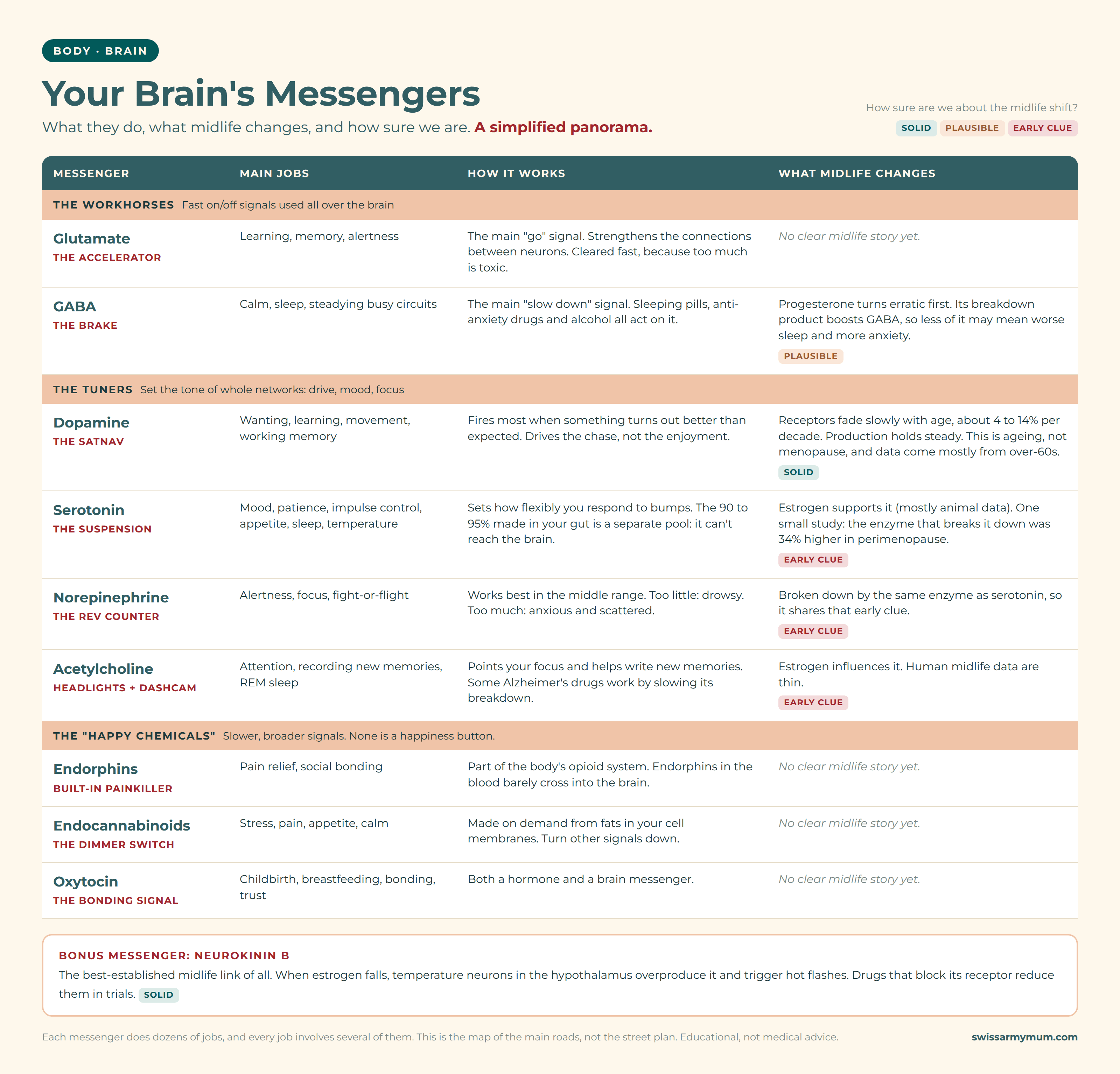
The human evidence here is mostly small studies, and a lot of the detailed mechanism comes from animal research. But the direction is consistent.
Serotonin. Estrogen generally supports serotonin signalling, mostly shown in animals. In humans, one brain imaging study found that MAO-A, an enzyme that breaks down serotonin, dopamine and noradrenaline, was 34% higher in perimenopausal women than in women of reproductive age.
GABA. Progesterone often becomes erratic before estrogen does, and its breakdown product boosts GABA’s calming effect. Erratic progesterone may contribute to sleep problems and anxiety in perimenopause. The mechanism is solid; direct perimenopause data are limited.
Hot flashes. This is the best-established part of the story. Hot flashes start in a small group of neurons in the hypothalamus, the brain’s temperature control centre. Estrogen normally keeps them in check. When it falls, they become overactive and release too much of a messenger called neurokinin B, which triggers flushing and sweating. Drugs that block its receptor reduce hot flashes in randomised trials, which confirms the mechanism is real in women.
Dopamine and age. Separate from menopause, dopamine receptors decline gradually across adulthood, by about 4 to 14% per decade depending on what’s measured. The brain’s capacity to make dopamine does not decline. Most of these data come from adults over 60, and the change is slow.
Mood. Perimenopause is a window of higher risk for depressive symptoms. That risk isn’t universal. It clusters in women with past depression, or with severe sleep disruption from night sweats. Women with a history of premenstrual dysphoric disorder or postpartum depression may be more sensitive to hormone swings.
Myth-Busting: What the Evidence Actually Says
Myth 1: “A dopamine detox resets your brain”
No study has measured a dopamine “reset” from abstaining from phones or pleasures. The brain makes and releases dopamine continuously.
The behavioural part is sound, though: putting the phone out of the bedroom is classic habit change. Keep the behaviour.
Myth 2: “Depression is a chemical imbalance”
A 2022 umbrella review found no consistent evidence that low serotonin causes depression1. A rebuttal from more than 30 researchers argued that the serotonin system is still implicated, especially in vulnerable people2. But even the rebuttal’s authors don’t support the simple “low serotonin causes depression” story. The honest summary: the simple version isn’t supported, and serotonin is plausibly one part of a complex picture. None of this tells you whether antidepressants work. That’s a separate question, answered by clinical trials, and they help some people. Never stop them because of this debate. Talk to your doctor first.
Myth 3: “Eat bananas or turkey to boost serotonin”
Food contains building blocks such as tryptophan and tyrosine, not usable amounts of the messengers themselves. In fact, a high-protein meal can lower the share of tryptophan reaching the brain, because other amino acids compete for the same entry route. Healthy eating patterns are linked to better mood, but that’s not proof of a “neurotransmitter hack”.
Myth 4: “Runner’s high comes from endorphins”
In a double-blind trial, runners were given either a drug that blocks the opioid system or a placebo before running. Blocking the opioids did not stop the post-run euphoria or the drop in anxiety, and endocannabinoid levels rose in both groups3. Endorphins in the blood also don’t cross into the brain in meaningful amounts. Endocannabinoids are the better-supported explanation.
Myth 5: “A cold plunge raises dopamine by 250%”
That figure comes from one small study in young men who sat in 14°C water up to their necks for a full hour4. It measured dopamine in the blood, which mostly reflects the body’s stress response, not the brain. Mood wasn’t measured. Applying it to a two-minute morning plunge is a stretch.
Myth 6: “Caffeine gives you a dopamine hit”
In a brain imaging study, caffeine did not increase dopamine release. It mainly blocks adenosine, the “sleep pressure” signal from the Sleep Blueprint, and it made dopamine receptors more available. Note that the study included only men5.
The 80/20: Support the System, Don’t Push the Chemicals
The things that reliably make you feel better work whatever is happening to your dopamine and serotonin. Ranked by evidence:
1. Move most days
The strongest lever by far. A 2025 meta-analysis of 21 randomised trials found that exercise reduced depressive and anxiety symptoms in women going through the menopause transition and after6. Walking, yoga, strength training and dance all count. Moderate endurance sessions of around 30 to 45 minutes are the range linked to the endocannabinoid rise behind the runner’s high.
2. Protect your sleep
Poor sleep reliably worsens next-day mood, attention and stress tolerance. The Sleep Blueprint fundamentals apply, and in perimenopause, treating night sweats is part of sleep care.
3. Get your symptoms assessed and treated
Hot flashes, broken sleep and new low mood in perimenopause are biologically driven. Treatments exist, hormonal and non-hormonal, and some act directly on the mechanisms above.
4. Connection, and wanted touch
A large meta-analysis of 137 studies found that touch interventions, like massage, had medium-sized benefits for mental and physical health, including depression and anxiety, in healthy adults as well as patients7.
5. Eat the pattern
A whole-food, Mediterranean-style pattern has moderate evidence for better mood and long-term brain health. Not as a chemistry hack. As the same plate from the Fuel Blueprint.
Safety Notes
See a doctor if: low mood or loss of interest lasts more than two weeks; you have new anxiety, panic or severe sleep disruption in perimenopause; memory problems are getting worse or affecting daily life; or low motivation comes with fatigue, weight change or heavy periods, since iron, thyroid and other causes are worth checking. If you have any thoughts of harming yourself, seek help urgently.
If sorting the real evidence from the noise is useful to you, subscribing keeps this series and everything after it landing straight in your inbox.
References
Moncrieff, J. et al. “The serotonin theory of depression: a systematic umbrella review of the evidence.” Molecular Psychiatry, 2023. https://doi.org/10.1038/s41380-022-01661-0
Jauhar, S. et al. “A leaky umbrella has little value: evidence clearly indicates the serotonin system is implicated in depression.” Molecular Psychiatry, 2023. https://doi.org/10.1038/s41380-023-02095-y
Siebers, M. et al. “Exercise-induced euphoria and anxiolysis do not depend on endogenous opioids in humans.” Psychoneuroendocrinology, 2021. https://doi.org/10.1016/j.psyneuen.2021.105173
Šrámek, P., Šimečková, M., Janský, L., Šavlíková, J. and Vybíral, S. “Human physiological responses to immersion into water of different temperatures.” European Journal of Applied Physiology, 2000, 81(5): 436–442. https://doi.org/10.1007/s004210050065
Volkow, N.D., Wang, G.-J., Logan, J., Alexoff, D., Fowler, J.S., Thanos, P.K. et al. “Caffeine increases striatal dopamine D2/D3 receptor availability in the human brain.” Translational Psychiatry, 2015, 5: e549. https://doi.org/10.1038/tp.2015.46
Yue, H. et al. “Effects of physical activity on depressive and anxiety symptoms of women in the menopausal transition and menopause: a comprehensive systematic review and meta-analysis of randomized controlled trials.” International Journal of Behavioral Nutrition and Physical Activity, 2025. https://doi.org/10.1186/s12966-025-01712-z
Packheiser, J. et al. “A systematic review and multivariate meta-analysis of the physical and mental health benefits of touch interventions.” Nature Human Behaviour, 2024. https://doi.org/10.1038/s41562-024-01841-8